
Interior Paint Applied Where Altitude Affects Every Coat
Interior Painting in Aspen for residential and commercial spaces where high-altitude conditions, temperature swings, and mineral-laden water affect finish quality and curing
At Aspen's elevation, paint curing behaves differently than it does at sea level—lower atmospheric pressure accelerates solvent evaporation, which can cause paint to skin over before it has fully bonded to the surface beneath it if application timing and product selection are not adjusted accordingly. Marquez Maintenance LLC delivers interior painting for homes and commercial spaces across Aspen and surrounding areas, with an approach calibrated to the specific conditions that the mountain environment creates. This matters most during temperature transition periods when daytime indoor warmth and overnight cold create the rapid cycling that stresses fresh paint films before they fully cure.
Interior painting at the full-service level runs from surface preparation through final coat, and the preparation stage is where most of the quality difference between painting projects is actually determined. In Aspen homes, mineral-laden water and high indoor humidity from forced-air heating create surface conditions—efflorescence on lower walls, micro-cracking where substrates have cycled through temperature extremes, and residue on surfaces near water fixtures—that require addressing before primer and topcoat are applied. Skipping surface prep in these conditions produces finish failures: peeling at edges, uneven sheen, and adhesion loss that becomes visible within one to two heating seasons.
Request an on-site review of your interior spaces to assess surface conditions and discuss paint selection appropriate for the rooms and usage involved.
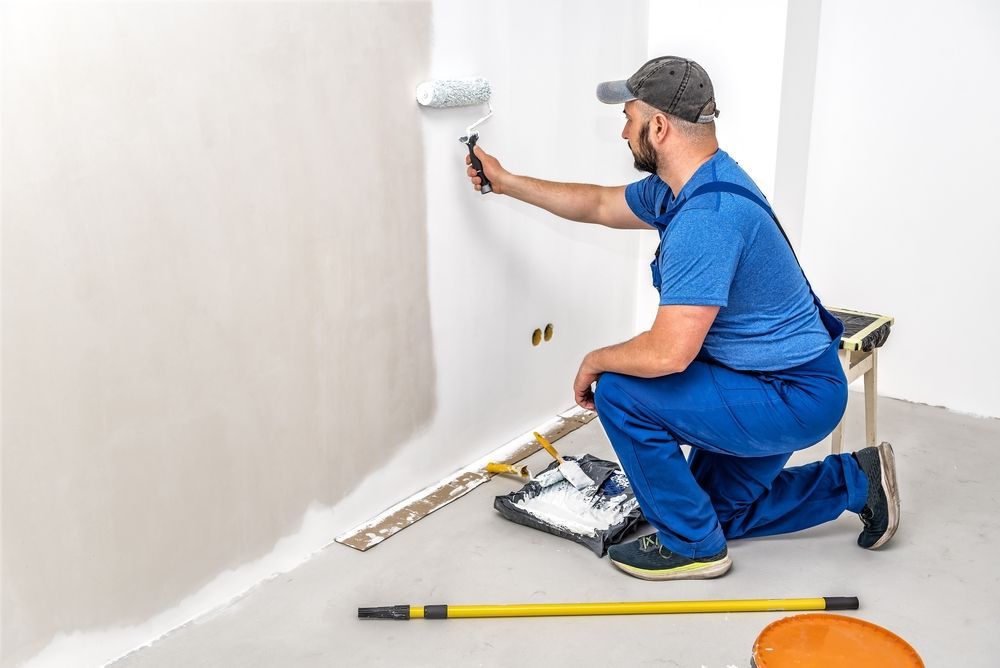
What the Painting Process Actually Accomplishes Room by Room
A complete interior painting project moves through distinct phases that each affect the final result: surface cleaning and repair, priming where required by substrate condition or color transition, application of topcoat in the specified finish, and detail work at trim, edges, and transitions. In Aspen properties with exposed beam ceilings, stone or tile adjacent to painted drywall, and high-end millwork, the masking and protection stage requires careful execution—paint overspray or edge bleed onto adjacent materials in a high-value space creates remediation work that offsets the visual improvement the painting was meant to produce.
After interior painting is complete, the most immediate observable change is color uniformity across the wall surface—properly applied paint in adequate coat thickness eliminates the patchy, uneven coverage that shows when paint is thinned, rolled too fast, or applied to an unprepared surface. Trim and ceiling line work done with clean edges defines the room's geometry visually in a way that off-cut edges or bleed lines undermine, regardless of how well the wall color itself reads. Marquez Maintenance brings the same attention to these detail areas as to primary wall surfaces because finish quality is evaluated as a whole.
Paint selection involves decisions beyond color—sheen level, formulation (water-based versus oil-based where applicable), and the specific product's performance characteristics all affect how the finished surface holds up to cleaning, moisture exposure, and the mechanical wear that high-traffic rooms produce. These choices are discussed during the project review so that the paint specified for a bathroom, kitchen, or entry hallway is appropriate for the actual conditions in that space rather than selected on color alone.
What Homeowners and Property Managers Typically Ask
These questions cover the practical concerns that come up most often when planning an interior painting project in Aspen-area homes and commercial properties.
How does high altitude in Aspen affect the painting process?
Lower atmospheric pressure at Aspen's elevation causes paint solvents to evaporate more rapidly, which means application timing and product viscosity require adjustment to prevent skinning before the coat has fully bonded—this is a specific consideration that painters working primarily at lower elevations may not account for.
What surface preparation is needed before painting in a mountain home?
Preparation typically includes cleaning surfaces of mineral residue and dust, repairing micro-cracks and fastener pops that develop from temperature cycling, and priming areas where efflorescence, water staining, or significant color transitions exist.
Why does paint peel in some rooms but not others in the same house?
Peeling is most often a surface adhesion problem caused by inadequate prep, moisture in the substrate, or application over a surface contaminated with residue—bathrooms, kitchens, and lower wall areas adjacent to exterior walls are the most common locations because moisture levels in those areas are higher.
When is the best time to schedule interior painting in Aspen?
Interior painting can be completed year-round, but scheduling during periods of stable indoor temperatures—avoiding the coldest months when heating systems create very low indoor humidity—supports more consistent curing conditions for water-based paints.
Does Marquez Maintenance handle both residential and commercial interior painting?
Yes—the service covers residential interiors of all sizes and commercial spaces including offices and retail properties across Aspen, Snowmass Village, Basalt, Carbondale, and Glenwood Springs.
Marquez Maintenance LLC is available at (970) 456-5100 to walk through your interior painting project, assess the surface conditions in each room, and establish an approach suited to your property's specific materials and the demands of Aspen's high-altitude environment.