
Landscapes Built for Mountain Conditions
Landscaping Services in Aspen for properties where elevation, freeze-thaw cycles, and short growing seasons limit what standard plant selections can survive
Marquez Maintenance LLC provides full-scope landscaping design, installation, and ongoing maintenance for residential and commercial properties in Aspen, where growing conditions differ significantly from lower-elevation landscapes. At roughly 8,000 feet, plant survival depends on selecting species rated for hard freezes, late spring frosts, and soils that drain differently than valley-level ground. Property owners who have watched generic nursery selections fail through a single winter are the clients this service is built around.
The design process begins with a consultation that accounts for sun exposure, slope orientation, soil composition, and the specific freeze-thaw pattern on your property—factors that vary block by block in mountain terrain. Plant sourcing focuses on species suited to high-altitude conditions, and hardscape installation is planned alongside irrigation design calibrated for high-altitude water management, where pressure and evaporation rates differ from standard residential systems. Post-installation maintenance continues through the establishment period, which in Aspen's compressed growing season requires more structured attention than the same plants would need at lower elevations.
Request a design consultation to review your site conditions and discuss plant and hardscape options suited to your property..
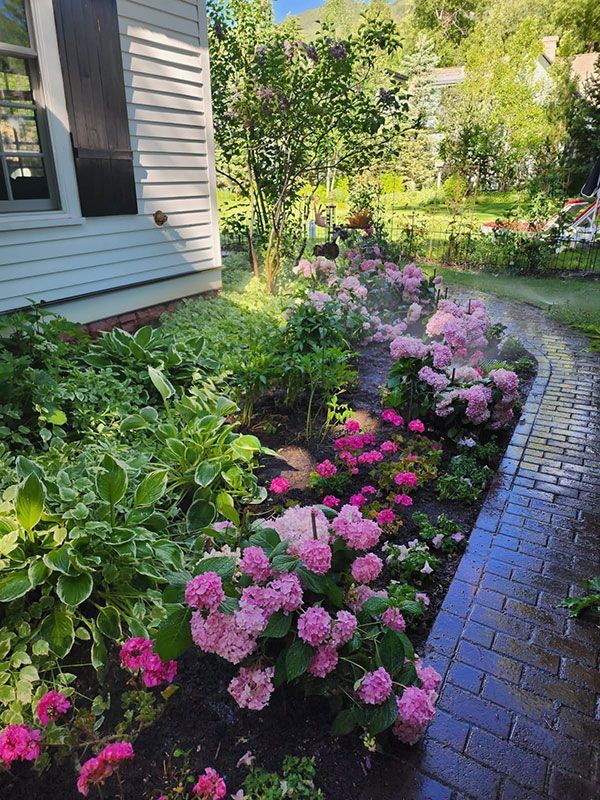
What Proper Mountain Landscaping Requires
Selecting plants without accounting for Aspen's elevation means working against the climate rather than with it. During the design and installation process, Marquez Maintenance evaluates each planting zone on your property for frost pocket formation, drainage behavior during snowmelt, and soil structure—all of which determine whether a planting thrives or requires repeated replacement. Irrigation design at this elevation accounts for reduced atmospheric pressure and faster surface evaporation, which changes how drip and spray systems need to be configured.
After installation is complete, you will notice that plant selections hold through the first hard freeze rather than showing dieback by October—a visible indicator that species selection was matched to actual site conditions. Hardscape elements seat correctly through the first thaw cycle, without the heaving or settling that occurs when base preparation does not account for freeze-thaw depth in mountain soil.
Ongoing maintenance is structured around Aspen's shorter growing window, with scheduling adjusted for late-season planting timelines and early winterization. What the service includes versus excludes is discussed during the initial consultation so that establishment care, irrigation adjustments, and seasonal cleanup are clearly scoped before work begins..
Answers to Frequent Landscaping Questions
Landscaping at elevation raises questions that don't apply to lower-elevation projects. The following covers what property owners in Aspen most commonly ask before starting a design or maintenance program.
What plants actually survive Aspen's winters without annual replacement?
Native and high-altitude-adapted species—such as those rated for USDA Zone 4 or lower—are the baseline for selections in Aspen. Ornamental varieties marketed for Colorado broadly often underperform above 7,500 feet, where overnight lows and frost timing differ substantially from Front Range conditions.
How does the design consultation work before installation begins?
The consultation covers site evaluation, sun and slope assessment, soil review, and discussion of your maintenance expectations, so plant and hardscape selections are matched to what your property can realistically support.
When is the right time to schedule installation in Aspen's growing season?
The compressed mountain growing window typically opens later in spring and closes earlier in fall than lower elevations, so installation timing is planned to allow adequate root establishment before the ground freezes.
Why does irrigation design matter differently at high altitude?
Evaporation rates increase at elevation and standard system configurations can under- or overwater depending on aspect and wind exposure—irrigation design calibrated for Aspen's conditions prevents both water waste and plant stress.
How does ongoing maintenance differ from a one-time installation?
Establishment care after planting involves monitoring soil moisture, adjusting irrigation as root systems develop, and addressing any frost heaving or drainage issues that appear through the first full seasonal cycle.
Marquez Maintenance LLC has worked with Aspen-area properties for over 15 years, building a client base that returns for ongoing care rather than repeated redesigns. To start with a property review and scope discussion, call (970) 456-5100.